
Many people use protein powder to stay healthy and build muscles. But some wonder if protein powder causes constipation. Constipation means having trouble pooping or pooping less often than usual.
Let’s explore this topic step by step. We will talk about what protein powder is, why constipation happens, and if protein powder can cause it. We will also share tips to avoid constipation if you use protein powder.
What Is Protein Powder?
Protein powder is a food made from proteins. It usually comes from milk, eggs, plants, or soy. People mix it with water, milk, or juice to drink. It helps people get more protein easily.
Protein is a nutrient that helps your body grow. It also helps muscles stay strong. Many athletes and fitness lovers use protein powder after exercise.
What Is Constipation?
Constipation means you have hard or dry poop. It can be hard to push out. Sometimes you poop fewer than three times in a week. This can make your belly hurt or feel full.
Many things can cause constipation. Some common reasons are:
- Not drinking enough water
- Eating little fiber
- Not moving or exercising enough
- Stress or changes in routine
- Some medicines
Can Protein Powder Cause Constipation?
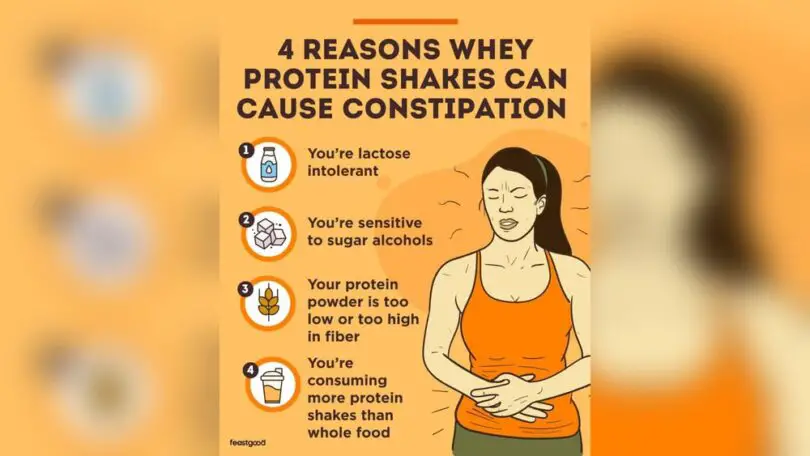
The short answer is: sometimes yes, but not always. Protein powder itself does not always cause constipation. But some reasons related to protein powder can make constipation happen.
1. Low Fiber Content
Most protein powders have little or no fiber. Fiber helps your poop stay soft and easy to pass. If you eat a lot of protein powder but little fiber, you might get constipated.
Fiber is found in fruits, vegetables, and whole grains. If you do not eat enough of these foods, your poop may become hard.
2. Not Drinking Enough Water
Protein needs water to be digested well. If you take protein powder but do not drink enough water, you can get constipated.
Water helps soften your poop. It also helps move food through your intestines.
3. Too Much Protein
Eating too much protein can cause constipation. Your body may have trouble handling so much protein. This can slow down digestion and make your poop hard.
Most adults need about 50 grams of protein a day. Athletes or active people may need more. But eating very high protein amounts can cause problems.
4. Type Of Protein Powder
Different protein powders affect digestion differently. For example:
- Whey protein: Usually digests well, but some people may have trouble.
- Casein protein: Slower to digest and may cause constipation for some.
- Plant protein: May have more fiber, so less chance of constipation.
People with lactose intolerance may get stomach problems from whey protein. This can include constipation or diarrhea.
Signs Protein Powder May Be Causing Constipation
You might feel these signs if protein powder causes constipation:
- Hard or dry poop
- Pooping less than usual
- Belly pain or cramps
- Feeling bloated or full
- Straining when pooping
How to Avoid Constipation When Using Protein Powder
If you want to use protein powder but avoid constipation, try these tips:
1. Drink Plenty Of Water
Always drink water when you take protein powder. Aim for 8 or more cups of water daily. Water helps your body digest protein and keeps your poop soft.
2. Eat Fiber-rich Foods
Eat fruits, vegetables, beans, and whole grains every day. These foods have fiber that helps digestion. Fiber makes poop soft and easy to pass.
3. Choose The Right Protein Powder
Try plant-based protein powders if whey or casein causes problems. Plant proteins often have more fiber and are easier to digest.
4. Don’t Eat Too Much Protein
Follow the recommended protein amounts for your body. Eating too much protein can cause constipation and other problems.
5. Stay Active
Exercise helps your intestines work well. Even walking for 30 minutes a day can help.
6. Try Adding Fiber Supplements
If you cannot eat enough fiber, talk to your doctor. You may try fiber supplements to help your digestion.
When to See a Doctor
If you have constipation for more than two weeks, see a doctor. Also see a doctor if you have:
- Severe belly pain
- Blood in your poop
- Sudden weight loss
- Fever or vomiting
Doctors can check if something else is causing constipation. They can give advice or treatment to help you.
Summary Table: Protein Powder and Constipation
| Factor | How It Affects Constipation | Tips to Avoid |
|---|---|---|
| Low Fiber | Can make poop hard and dry | Eat fruits and vegetables |
| Low Water Intake | Hardens poop and slows digestion | Drink 8+ cups of water daily |
| Too Much Protein | Slows digestion, causes constipation | Follow recommended protein amounts |
| Type of Protein Powder | Some types digest slower or cause issues | Try plant-based or different powders |
| Activity Level | Low activity can slow bowel movement | Exercise regularly |

Credit: fullyhealthy.com

Credit: www.thewellnesscorner.com
Final Thoughts
Protein powder can cause constipation for some people. But many times, it does not. The key is to use protein powder correctly. Drink enough water. Eat fiber-rich foods. Stay active and avoid too much protein.
Listen to your body. If you feel constipated after taking protein powder, try changing your habits. Choose a different type of protein powder if needed. Remember, good digestion helps you feel healthy and strong.
Protein powder is a helpful tool. But it should be part of a balanced diet. Taking care of your digestion will keep you feeling your best.
Frequently Asked Questions
Does Protein Powder Cause Constipation Often?
Protein powder can cause constipation if you consume too little water. Low fiber content in some powders may also slow digestion. Drinking more water and adding fiber helps prevent constipation.
Which Protein Powders Are Less Likely To Cause Constipation?
Whey protein isolate and plant-based powders usually cause less constipation. Powders with added fiber also support healthy digestion. Choose options with natural ingredients for easier digestion.
How Much Water Should I Drink With Protein Powder?
Drink at least 8-10 cups of water daily when using protein powder. Water helps fiber work and keeps stool soft. Staying hydrated reduces constipation risk.
Can Protein Powder Cause Digestive Issues Besides Constipation?
Yes, protein powder may cause bloating, gas, or stomach cramps. These issues often happen with lactose or artificial additives. Try different brands or types to find what suits you.